Difference between revisions of "Keys"
Jump to navigation
Jump to search
m |
|||
| (7 intermediate revisions by the same user not shown) | |||
| Line 1: | Line 1: | ||
| − | + | The key to keys is connecting groups of notes that go together. | |
| + | |||
| + | Keys and their related [[scales]] use the same patterns of notes, sharps and flats. | ||
For example: | For example: | ||
| − | * C [[major]] - often the first key you learn - all the white | + | * C [[major]] - often the first key you learn - all the white notes on a piano |
| − | * D flat major - all the black | + | * D flat major - all the black notes plus F + C |
| + | |||
| + | Also see [[pitch]] and [[note reading]]. | ||
| + | |||
| + | ---- | ||
| + | |||
| + | Test your knowledge of keys on the [http://dundeepiano.co.uk/quiz quizzes]. | ||
| + | |||
| + | ---- | ||
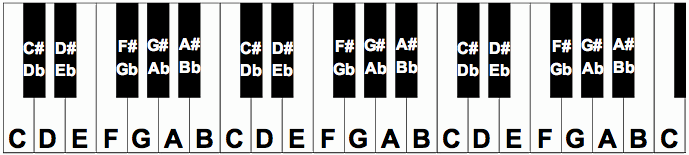
http://dundeepiano.co.uk/img/piano-sharps.gif | http://dundeepiano.co.uk/img/piano-sharps.gif | ||
Latest revision as of 10:08, 27 August 2020
The key to keys is connecting groups of notes that go together.
Keys and their related scales use the same patterns of notes, sharps and flats.
For example:
- C major - often the first key you learn - all the white notes on a piano
- D flat major - all the black notes plus F + C
Also see pitch and note reading.
Test your knowledge of keys on the quizzes.